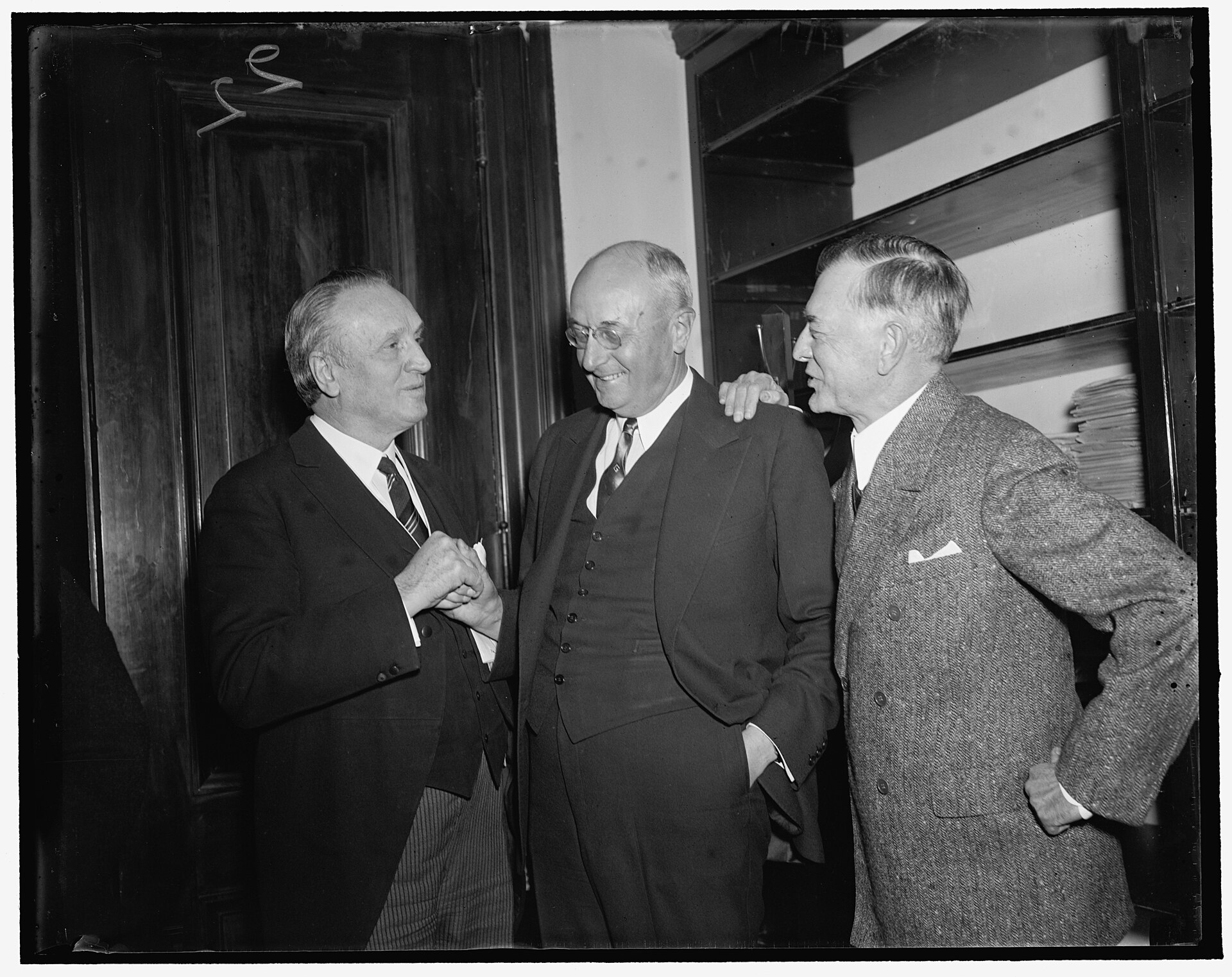
Attorney General Homer Cummings came to Congress in April 1934 with a proposal to tax firearms associated with violent crime. A committee member pressed him on machine guns: why let anyone buy them? His answer revealed the logic of the bill. A revenue law had to leave room for a legal, taxable sale.
Sources for this passage 01
Cummings makes his case
Chairman Robert Doughton’s House Ways and Means Committee heard Cummings on April 16, 1934. The bill before it, H.R. 9066, was broader than the law Congress eventually passed. Cummings presented it as part of the Roosevelt administration’s program against organized crime.
The proposal borrowed language from the Harrison Anti-Narcotic Act and the court decisions supporting it. Cummings wanted restrictions that could survive a challenge to Congress’s taxing authority. Taxable transactions had to remain possible for that approach to work.
The hearing also exposed the bill’s limits. Asked about John Dillinger crossing state lines and obtaining weapons through theft, Cummings pointed to a separate interstate-flight bill. He did not claim the firearms tax would solve every problem confronting police.
Sources for this passage 01
The fight over handguns
H.R. 9066 initially included pistols and revolvers. NRA president Karl T. Frederick objected to its design and its demands on ordinary owners. He predicted that a high dealer tax would drive small businesses out of the trade and make obtaining a gun difficult in rural communities.
Frederick had helped draft firearms legislation himself. He supported regulations he believed would usefully suppress crime, but challenged the bill’s fingerprinting, paperwork, and fees for interstate transport. He and the committee disagreed over what owners could reasonably be asked to do.
Milton Reckord, Maryland’s adjutant general and the NRA’s executive vice president, initially preferred rejection of the broad bill. In later testimony he accepted including machine guns and sawed-off shotguns while continuing to oppose the handgun provisions.
Doughton argued that lawful owners should accept some inconvenience to help prevent kidnappings and robberies. Assistant Attorney General Joseph Keenan emphasized the value of records and additional grounds for prosecution, even while acknowledging that hardened criminals would still obtain weapons.
Congress left ordinary handguns out of the final act. A pistol and a short-barreled shotgun would face different federal rules, a distinction that remained long after the witnesses had left public life.
Sources for this passage 02
$200 and a paper trail
President Franklin D. Roosevelt signed the National Firearms Act on June 26, 1934. Each covered transfer carried a $200 tax, subject to exemptions. Manufacturers and importers owed a $500 annual occupational tax; dealers owed $200 and pawnbrokers $300. The cost made dealing in these weapons a substantial commitment.
A transfer required a written order identifying the buyer and firearm. An individual buyer supplied fingerprints and a photograph. A tax stamp went on the order, and a copy went to the revenue authorities. Covered firearms already in private hands also had to be registered, with specified exceptions. Even a gift or loan could count as a transfer.
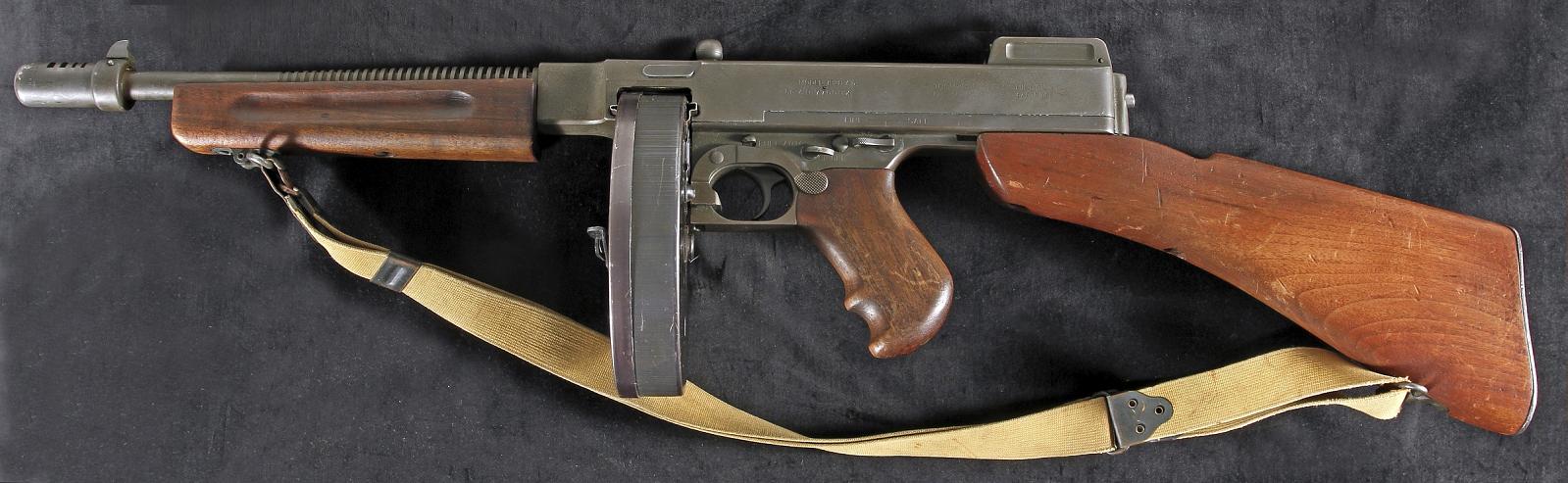
The law covered machine guns, silencers, rifles and shotguns with barrels shorter than 18 inches, and certain other concealable weapons. Ordinary pistols and revolvers were expressly excluded. Private ownership of covered weapons remained lawful, but it came with a tax and a federal paper trail.
Congress made an early adjustment in 1936. Rifles of .22 caliber or smaller were excluded when their barrels were at least 16 inches long and barrel length was the only reason for NFA coverage. The original dimensions were already changing.
Sources for this passage 03
A dealer challenges the tax
A dealer convicted of failing to pay the NFA’s annual occupational tax argued that Congress had disguised a regulatory penalty as a tax. His case reached the Supreme Court as Sonzinsky v. United States. On March 29, 1937, the Court upheld the provision.
Justice Harlan Fiske Stone’s opinion treated it as a valid revenue measure even though it discouraged the activity taxed. The Court declined to investigate Congress’s motives or decide how much regulation was too much. The dealer tax survived; the decision did not settle every possible challenge to the act.
Sources for this passage 01
A second law reaches the wider gun trade
On June 30, 1938, the Federal Firearms Act extended federal control beyond the NFA’s selected categories. Manufacturers and dealers shipping or receiving firearms in interstate or foreign commerce needed federal licenses and had to keep records. The law also restricted transactions involving fugitives and people convicted of crimes of violence.
A business could now face both the NFA tax system and a separate set of commercial rules. The later Gun Control Act would build on this broader approach.
Sources for this passage 01
Jack Miller, Frank Layton, and one shotgun
Federal prosecutors accused Jack Miller and Frank Layton of taking a double-barreled, 12-gauge Stevens shotgun from Claremore, Oklahoma, to Siloam Springs, Arkansas. Its barrel was shorter than 18 inches. The indictment charged interstate transportation without the required registration and stamped written order.
A federal district court dismissed the indictment on Second Amendment grounds. The government appealed directly to the Supreme Court, where no lawyer appeared for Miller or Layton. On May 15, 1939, Justice James McReynolds wrote that the record contained no evidence establishing a reasonable relationship between the shotgun and the preservation or efficiency of a well-regulated militia. The Court reversed and sent the case back.
The case had never produced a trial record establishing the weapon’s military uses. The justices were reviewing the dismissal of an indictment. Their decision left generations of lawyers arguing about the relationship between the Amendment’s militia language, an individual’s rights, and the kinds of arms protected.
Sources for this passage 02
Making a firearm becomes taxable
The original act had taxed transfers without imposing the later, separate tax on making an NFA firearm. Congress enacted that requirement on May 21, 1952; it took effect on September 1.
Subject to exceptions, a maker had to pay in advance and file a written declaration, with fingerprints and a photograph for an individual. Congress also prohibited possession of a firearm made in violation of the new requirements. A covered weapon could now incur a tax even when no sale followed.
Sources for this passage 01
The rifle rule changes again
The June 1, 1960 amendment extended the 16-inch rifle threshold beyond the limited small-caliber exception Congress had adopted in 1936. It also added an overall-length rule for weapons made from rifles or shotguns.
Congress set a $5 transfer tax for specified combination guns and the “any other weapon” category. These familiar parts of the NFA arrived through later amendments, decades after Roosevelt signed the original law.