After pleading guilty in a federal court in Texas, Haynes kept challenging the law behind his conviction. The NFA required people in his position to register their firearms. Doing so could give prosecutors evidence against them; staying silent could lead to a possession charge.
Sources for this passage 01
The right to remain silent
The old registration rule largely excused owners who had complied with the law when making or acquiring an NFA firearm. It demanded a separate filing from those outside that group. They had to identify themselves and their firearms, even when the disclosure could incriminate them.
Haynes v. United States came from the Northern District of Texas, where the defendant’s constitutional objection had been rejected before he pleaded guilty. Charles Alan Wright argued his appeal before the Supreme Court, invoking the Fifth Amendment’s protection against compelled self-incrimination.
On January 29, 1968, the Court reversed the conviction. Justice John Marshall Harlan explained that a proper claim of the privilege supplied a defense to the registration-related offenses at issue. Calling the charge possession rather than failure to register did not cure the problem: the law demanded incriminating information from people exposed to prosecution.
Sources for this passage 01
Johnson gets less than he asked for
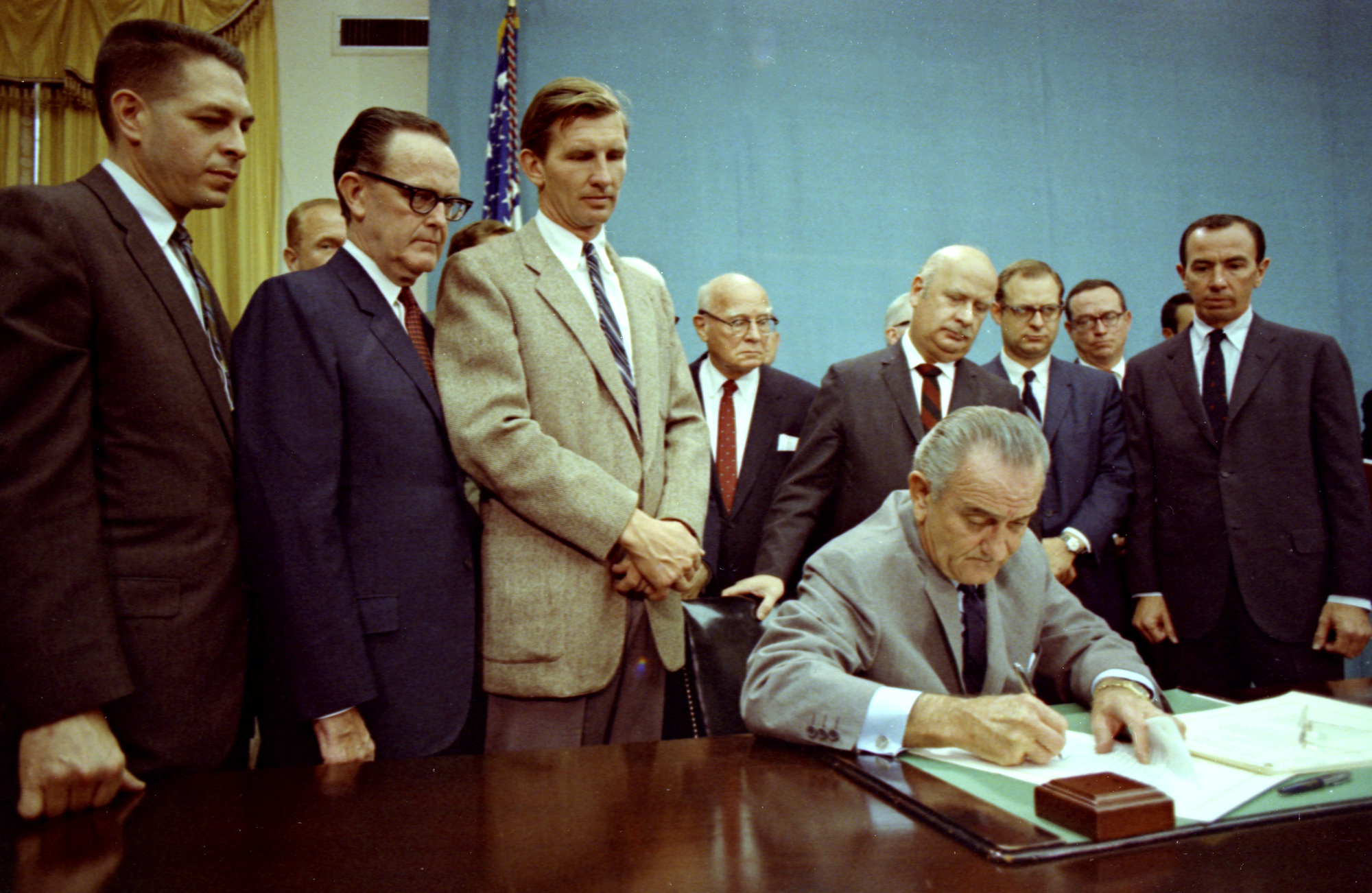
Congress rewrote the NFA during a much larger argument about firearms. The assassination of President John F. Kennedy in 1963 had intensified scrutiny of gun sales. The murders of Martin Luther King Jr. and Robert F. Kennedy in 1968 brought renewed urgency. President Lyndon Johnson signed the Gun Control Act on October 22, 1968.
At the signing, Johnson made clear that Congress had stopped short of his wishes. He had sought national registration of all guns and licensing of those who carried them. Neither proposal had become law. The NFA registry survived and expanded within its defined scope; it did not become a register of every privately owned gun.
Title I strengthened control of the wider market through business licensing, records, restrictions on interstate sales, and rules about who could receive firearms. Title II rebuilt the NFA’s additional requirements for selected categories of weapons.
Sources for this passage 03
Rebuilding the registry
The rewrite addressed the risk of self-incrimination. Section 5848 barred the use of information supplied in an application or registration against the applicant or registrant in a criminal proceeding about a violation committed before or at the time of filing. The information could still be used in a case about furnishing false information.
Registration duties went to manufacturers, importers, and makers. A transferor had to register a firearm to its recipient through the approved transfer process. The National Firearms Registration and Transfer Record would identify each covered firearm, its registration date, and the person entitled to possess it. Existing entries carried forward. The lawful process no longer depended on an unlawful possessor reporting an existing offense.
For a dealer, finding an eligible customer was only part of a covered sale. The transfer process had to be completed before delivery. Owners depended on approval and records for lawful acquisition, and federal approval remained subject to state and local law. Congress expressly required denial of a transfer that would violate the law.
Title II also broadened the weapons covered. Destructive devices brought specified explosive weapons and certain large-bore weapons into the NFA, with statutory exclusions. The machine gun definition reached frames or receivers and specified conversion parts or combinations of parts. Those definitions would later be contested in disputes over individual products.
Sources for this passage 02


A thirty-day window
From November 2 through December 1, 1968, an amnesty allowed people to register previously unregistered NFA firearms. The required disclosure could not be used as evidence against them of a prior or concurrent violation. Form 4467 asked owners to identify themselves and the firearm, when they had acquired it, and where it was usually kept. The government kept one copy and returned the other marked as registered.
After the window closed, an unlawful possessor could not use the ordinary transfer process to fix a missing registration. Freed later emphasized that the rewritten law did not authorize that possessor to register. A firearm’s history in the record could determine whether it could enter a lawful private transfer, even if its present owner was otherwise eligible to own guns.
Congress authorized the Treasury secretary to establish further amnesties, subject to conditions and a ninety-day limit for any one period. It gave owners no continuing right to register late.
Sources for this passage 04
Hand grenades test the rewritten law
United States v. Freed involved unregistered hand grenades. A federal district court had dismissed the indictment on self-incrimination and knowledge grounds. On April 5, 1971, the Supreme Court reversed. The revised registration duties, limits on the use of information, and administrative protections had removed the real risk of compelled self-incrimination that defeated the earlier law.
Prosecutors also did not need to prove that the defendants knew the grenades were unregistered. The Court emphasized the dangerous character of hand grenades. Later cases, including Staples v. United States, would ask a different question: what must an owner know about the physical characteristics that bring a weapon under the NFA?
Sources for this passage 01
A bureau of its own
On July 1, 1972, the Bureau of Alcohol, Tobacco and Firearms became a separate bureau within the Treasury Department. It took over the duties of the IRS’s Alcohol, Tobacco and Firearms Division and administered the NFA alongside the Gun Control Act.
Its responsibilities included licensing businesses, restricting transactions and possession, collecting NFA taxes, and maintaining the registry. Congress would take up the breadth and enforcement of federal gun laws again in the Firearms Owners’ Protection Act of 1986.